
Shape / A Society field guide
A more defined waist.
Start with the fit. Then name the change.
Maybe it is a waistband, the line of a fitted dress, or a particular area of your abdomen. Make the goal that specific. “Waist sculpting” is a marketing phrase; it does not tell you what tissue a treatment targets.
Find your starting pointAbdomen · Contour · Clothing fit

01 / Get specific
Which change are you thinking about?
The same waistband concern can have different explanations. Use these starting points to prepare for an assessment.
One local area
Define the area, not a dress size.
If you are curious about a particular bulge or outline, name its location and how it affects clothing fit. A clinician can assess whether localized contouring is relevant.
Explore the abdomen guideLoose or folded skin
Skin deserves its own assessment.
If your concern is skin that drapes or folds, say that directly. A discussion about reducing a fat bulge does not answer a question about excess skin.
Understand contouring limitsAn overall size change
Discuss the broader goal first.
If your goal is overall weight change, bring that to a qualified medical professional. Non-invasive body contouring is not a weight-loss treatment.
Read about medical weight management02 / Know the difference
Know what you are being quoted for.
Ask the practice to describe the objective before it describes a package. These are different kinds of assessment.

Local contour
Non-invasive fat reduction
What to understand
Some devices target small localized fat bulges. The expected change depends on the device and the area.
This does not produce weight loss or remove excess skin.
Before committing
Ask for the exact area, device, number of sessions, review point, and complication plan.
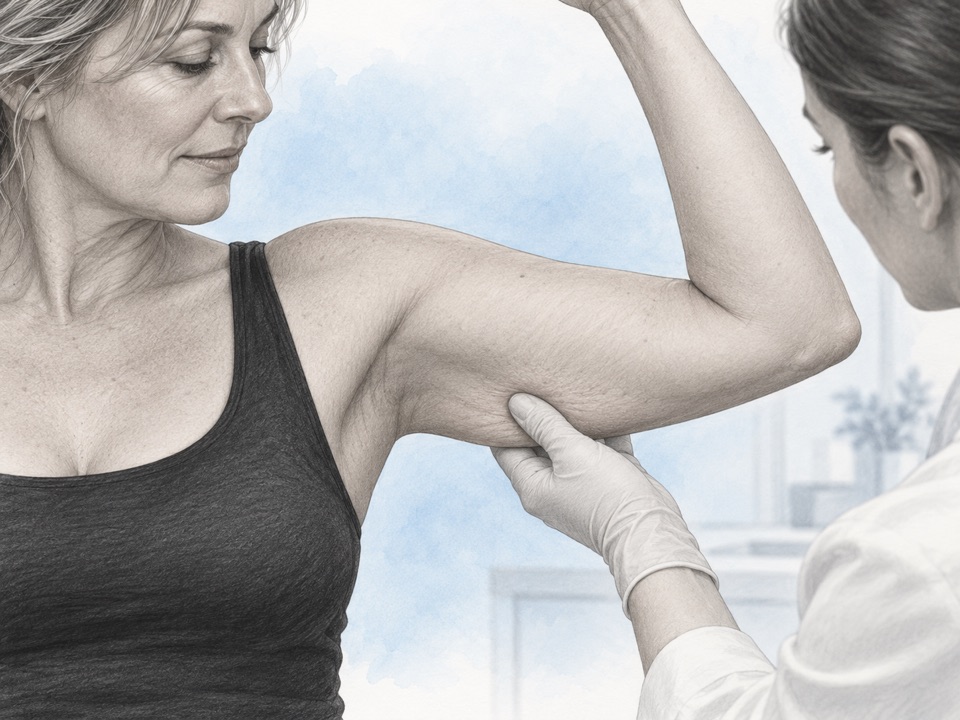
Skin
Assessment of skin laxity
What to understand
A clinician can distinguish a skin concern from a fat-contour concern and explain the available options.
“Tightening” and “fat reduction” do not mean the same thing.
Before committing
Request an explanation of the realistic degree of change and whether a different specialist is needed.

Broader goal
Medical weight-management assessment
What to understand
A consultation about overall weight, health, and treatment eligibility is separate from cosmetic contouring.
A look guide cannot determine eligibility for medication.
Before committing
Discuss medical history, ongoing care, alternatives, and the full cost with a qualified prescriber.
AI-generated editorial illustrations show treatment settings and assessment areas. They do not depict real patients or treatment results.
Options to research and discuss. A qualified clinician must assess suitability; choosing a goal here does not recommend a procedure.
The detail that matters
A smaller area is not a weight-loss plan.
The FDA distinguishes local body contouring from weight loss and its health benefits. Decide which goal you are actually pursuing before comparing devices or purchasing a package.
Read the FDA overviewDescribe the fit
“I want to discuss this area above my waistband” gives the clinician a concrete point to assess.
Ask about the whole course
Have the quote name every area, session, follow-up, and proposed maintenance visit.
Agree on the comparison
Use consistent clothing, lighting, and posture in any progress photographs. Ask when it is reasonable to compare them.
03 / Take something useful with you
Your consultation brief.
Put your goal and questions in one place. Download your notes to bring to an appointment.
When you are ready
Research practices offering body contouring.
Use the treatment filter to make a shortlist, then confirm the actual device, clinician, and assessment offered.
Sources & editorial notes Updated 17 October 2026
Educational information from the sources below, checked 17 October 2026. This guide is not a personal treatment plan and has not been independently reviewed by a clinician. Illustrations are artistic references, not patient results.