
Skin & hair / A Society field guide
The smooth-leg look.
Less time removing hair. More clarity about the upkeep.
Choose what you want to change: the shaving schedule, irritation after removal, or persistent light-coloured hairs. Those are three different starting points, even if the same photograph inspired them.
Find your starting pointHair removal · Skin tone · Upkeep
01 / Get specific
What would make your routine easier?
The useful comparison starts with your hair, your skin, and how much ongoing upkeep you want.
Less frequent shaving
Compare the whole course.
Laser hair removal involves repeated appointments, usually spaced weeks apart. Ask about the likely course and maintenance before comparing it with your current routine.
Explore laser hair removalLess irritation or bumps
Identify the source of the bumps.
Irritation after shaving and persistent skin bumps should not automatically be treated as the same problem. Describe when they appear and what hair-removal methods you use.
Explore the leg guideLight-coloured hair
Hair colour changes the options.
Laser targets pigment and does not work well for blond, white, grey, or red hair. Electrolysis is a different option to discuss for light-coloured hairs.
Compare hair-removal methods02 / Know the difference
Compare laser hair removal and electrolysis.
Start with your hair colour and skin tone, then compare the course of appointments, maintenance, and risks.
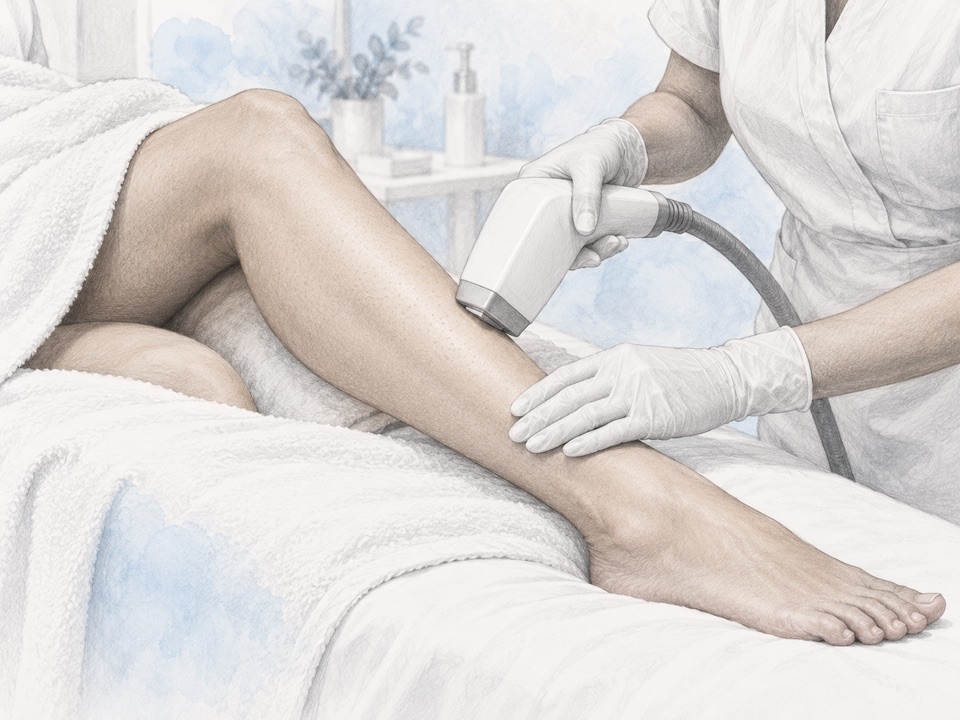
Pigment-targeted
Laser hair removal
What to understand
A course of treatments can reduce unwanted hair. Maintenance may still be needed.
Skin tone, hair colour, device choice, and practitioner experience matter. Burns and pigment changes are possible.
Before committing
Ask for the likely appointment schedule, total cost, preparation, and sun-exposure restrictions.
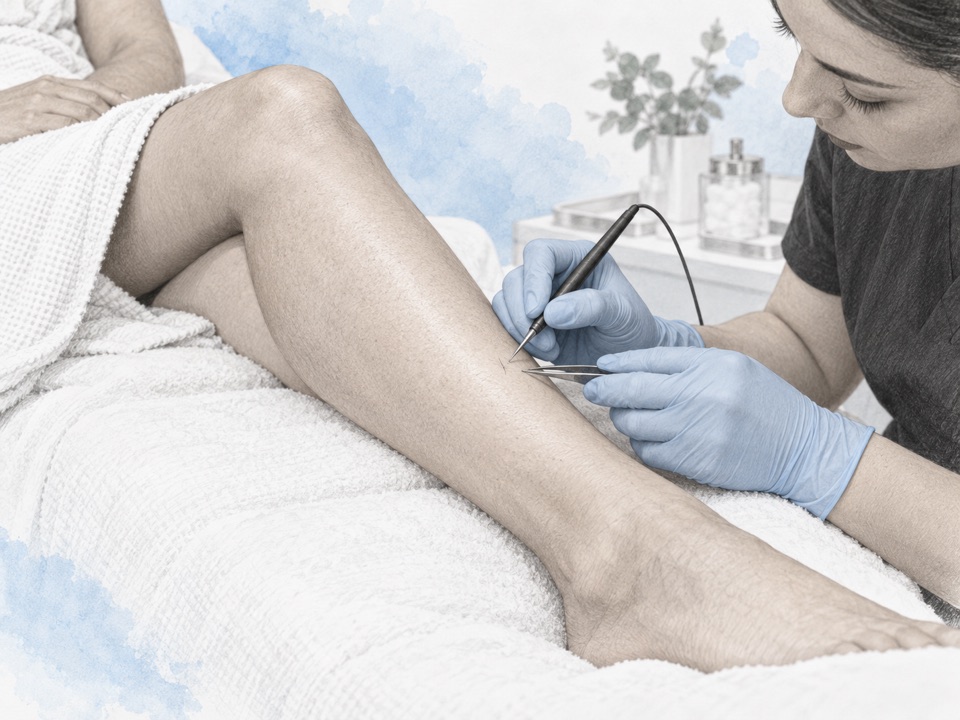
Follicle by follicle
Electrolysis
What to understand
Can treat hair colours that laser does not target effectively.
Repeated sessions are needed. Practitioner skill matters for avoiding injury.
Before committing
Discuss the size of the area and the time involved before committing to both legs.
AI-generated editorial illustrations show treatment settings and assessment areas. They do not depict real patients or treatment results.
Options to research and discuss. A qualified clinician must assess suitability; choosing a goal here does not recommend a procedure.
The detail that matters
Put holidays on the calendar before appointments.
Recent tanning and planned sun exposure belong in the consultation. Ask for written instructions about preparation and aftercare, including how to manage hair between sessions.
Read the AAD preparation guideClarify the treatment area
Ask whether the quote covers lower legs, thighs, knees, or the full leg. Package labels vary.
Bring your skin history
Mention recent tanning, medicines, previous reactions, and a history of scarring.
Ask about the gaps
Get instructions on shaving, waxing, sun exposure, and what to do if you miss a session.
03 / Take something useful with you
Your consultation brief.
Put your goal and questions in one place. Download your notes to bring to an appointment.
When you are ready
Find practices offering laser hair removal.
The directory filter narrows the service. Confirm the device, practitioner, and suitability at a consultation.
Sources & editorial notes Updated 17 October 2026
Educational information from the sources below, checked 17 October 2026. This guide is not a personal treatment plan and has not been independently reviewed by a clinician. Illustrations are artistic references, not patient results.